
Rx for Science Literacy: The What, Where, How and Why of Health Science Research
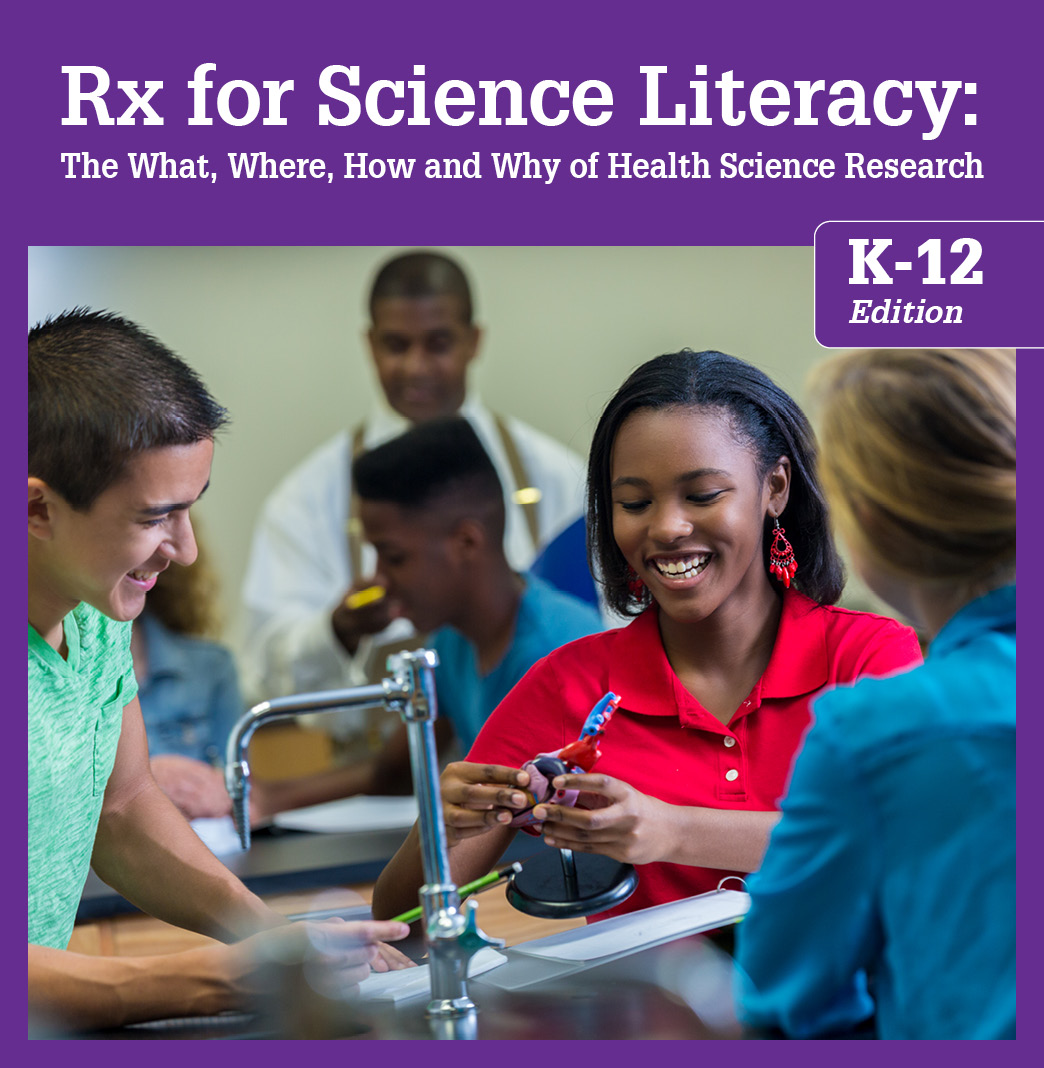
The Rx for Science Literacy: The What, Where, How and Why of Health Science Research curriculum manual is designed for use by K–12 teachers in science and other subjects.
2021 Edition Now Available
With generous support from the Biogen Foundation, NCABR and a team of science writers, biomedical researchers and curriculum developers comprehensively updated and expanded the Rx for Science Literacy curriculum manual in 2020 and 2021.
New Features
The 2021 edition is a K-12 resource appropriate for educators in kindergarten through 12th grade, including Career and Technical Education instructors. The curriculum is bound in a three-ring binder with pages designed specifically for photocopying.
The 2021 edition includes a comprehensive update of all content, statistics and charts, and it includes a variety of new activities, resources, interviews with North Carolina-based scientists, and updated and entirely new content on vaccine research and development, COVID-19 and CRISPR.
The 2021 edition features new and updated activities, including:
- Effects of Food and Exercise
- Disease Modeling
- Use of Animals in Biomedical Research
- Case Studies in Trust of the Scientific Method: Are Vaccines Safe?
- Communication of Scientific Facts: GMOs and You
- Changing Animal Models
- Looking Ahead: Careers
- Visualizing CRISPR
- Virtual Fieldtrip — Explore CRISPR and Sickle Cell
- Explore CRISPR Steps with CRISPR Associated Proteins and CRISPR 3D
- CRISPR: What Could A Tree Be?
- Will this Vaccine Work?
State-Endorsed
Rx for Science Literacy is the primary curriculum resource for the statewide Biomedical Technology course taught in North Carolina public high schools. It is filled with background information, handouts, lesson plans and activities on many topics, including the process, benefits and ethical considerations of biomedical research, the care and use of animals in medical science, and life science careers. Click here for the table of contents.
Not Only for Science Teachers
Rx for Science Literacy includes a curriculum crosswalk for science, English, social studies and technology teachers. It shows many of its possible connections to the North Carolina standards across many curricula areas, including the North Carolina Essential Standards for Science. The crosswalk includes connections to the Next Generation Science Standards.
The crosswalk mapped to the 2023 North Carolina Essential Standards for Science can be found here.
The crosswalk mapped to the 2009 North Carolina Essential Standards for Science can be found here.
The manual also includes a reading guide that provides activities for using the reference materials in the manual as a way of integrating the Reading Standard for Informational Text from the Common Core State Standards for English Language Arts & Literacy in History/Social Studies, Science, and Technical Subjects into the science classroom.
Note: NCABR has a very limited number of the 2013 editions of the curriculum manual. Those wishing to purchase this edition should email Virginia Crisp at vcrisp@ncabr.org.
- Printed Manual (2021 edition): $158.00
- Receive a free copy by attending an NCABR in-person workshop that features this curriculum manual. Click here for the workshop schedule.
Mapping Your Future: Careers in Biomanufacturing
For Middle and High School Educators This supplemental curriculum manual of 190+ pages focuses on the wide range of career prospects offered by the fast-growing field of biomanufacturing. It’s the basis for Biotechnology Research and Careers, NCABR’s ongoing online professional development course for teachers from grades 6-12. The manual was updated comprehensively in spring 2014 to reflect a North Carolina biotechnology and biomanufacturing landscape that has changed significantly since the manual’s initial publication, in 2006. Since the manual first was published, NCABR has held numerous day-long professional development workshops to introduce North Carolina teachers to the curriculum. Workshops have been held at Biogen, in Research Triangle Park; Wyeth Pharmaceuticals, in Sanford; and North Carolina State University’s Golden LEAF Biomanufacturing Training and Education Center, in Raleigh. As part of a 2008 national science curriculum conference, NCABR also held a workshop that featured the manual for teachers from 24 states. In all, more than 200 teachers have participated in a related workshop, and more than 500 copies of the manual have been distributed to teachers through Career and Technical Education programs of the North Carolina Department of Public Instruction. The Biogen Foundation and the North Carolina Biotechnology Center generously have provided funding to make Mapping Your Future possible.
Pathology & Forensic Science
Curriculum Supplement for North Carolina CTE Educators This 97-page curriculum supplement was published in July 2013 and features five units about pathology and forensic science:
- Diagnostic Services in Health Care
- Autopsy
- DNA Analysis
- Applications of Forensic Science
- Uncertainty in Medical Testing
Each unit contains (a) a reference article that gives students an overview of the unit’s topic and (b) a student activity that is accompanied by a teacher activity overview. The curriculum supplement was created in partnership with the North Carolina Department of Public Instruction.