
With today’s rapidly changing workplace, emerging technologies and new scientific issues, K–12 educators are challenged to prepare themselves and their students for the future.
Since 1994, NCABR’s Rx for Science Literacy workshops have helped more than 5,290 educators from 97 of North Carolina’s 100 counties do just that.
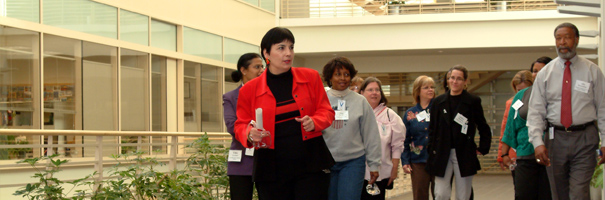
At the workshops, educators tour a research facility, hear from scientists about their latest research advances and take home a free curriculum and other bioscience education materials.
Each workshop is completely free to attend. You may attend as many workshops as you like.
The Rx for Science Literacy series is open to all K–12 science teachers and administrators in North Carolina as well as preservice teachers actively pursuing a degree in education.
Friday, September 15, 2023
Duke University
8:00 a.m. – 4:00 p.m.
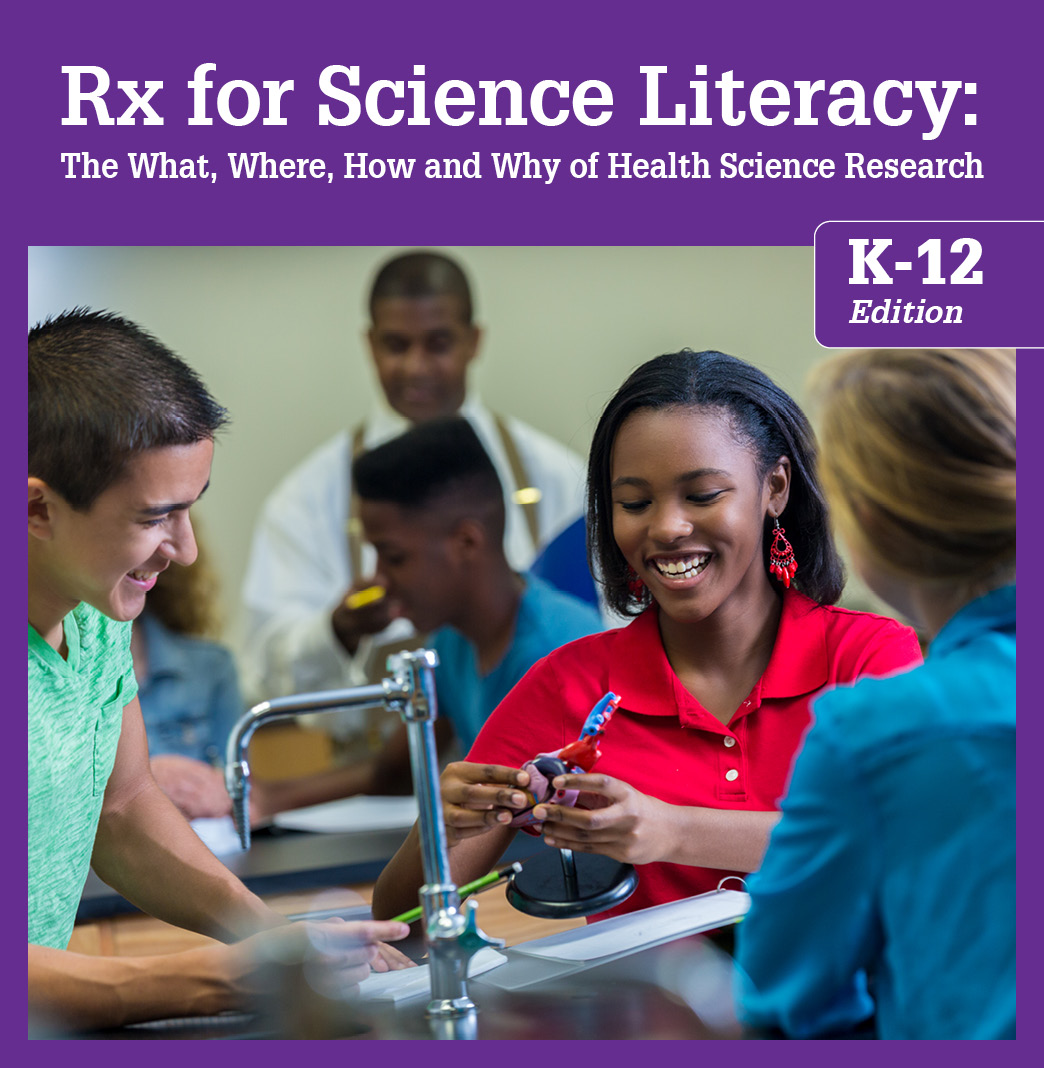
Rx for Science Literacy is partnering with Duke University to present Rx for Science Literacy: The What, Where, How and Why of Health Science Research, a one-day in person workshop at Duke featuring the newly updated and expanded Rx for Science Literacy curriculum.
This workshop will provide an overview of the Rx for Science Literacy curriculum manual, and Duke scientists will address a variety of current hot topics in medical research. Each attendee will receive a copy of the newly updated Rx for Science Literacy curriculum manual at no cost.
About the Curriculum: With generous support from the Biogen Foundation, NCABR and a team of science writers, biomedical researchers and curriculum developers comprehensively updated and expanded the Rx for Science Literacy curriculum manual in 2020. The newly updated curriculum includes a comprehensive update of all content, statistics and charts. The manual also includes a variety of new activities, resources, interviews with real world scientists and a new section on CRISPR and CRISPR technology. The manual includes chapters on nanobiotechnology, regenerative medicine and vaccines and is accompanied by several resources, including a curriculum crosswalk that shows connections to North Carolina science standards (both 2009 standards and those adopted in July 2023), the Next Generation Science Standards, and a reading guide aligned to the Common Core standards.
Tuesday, November 28, 2023
Duke University
8:00 a.m. – 4:00 p.m.
Rx for Science Literacy is partnering with Duke University to present Exploring Bioethics and the Use of Artificial Intelligence in Medicine, a one-day in person workshop at Duke.
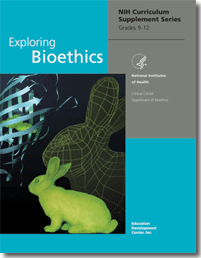
About the Workshop: This workshop will feature an overview of the National Institutes of Health’s Exploring Bioethics curriculum, which is geared for use with high school and advanced middle school teachers. Duke researchers will discuss Artificial Intelligence (AI) in medicine and the ethical issues that have been identified in relation to AI in the field of healthcare. Attendees will receive a free copy of the curriculum at the workshop.
About the Curriculum: The NIH Exploring Bioethics curriculum supplement focuses on some of the challenging and engaging ethical issues our society is facing as a consequence of advances in the life sciences. The curriculum addresses genetic testing, the use of human subjects in research, steroid use by athletes, organ allocation for transplants, and the modification of animals for human benefit. The lessons promote problem-solving and communication skills, critical thinking and teamwork. The curriculum supplement presents six three-day lessons in a convenient, all-in-one resource that is well organized for integration into a broader curriculum. The NIH Office of Science Education and Department of Bioethics produced the curriculum in partnership with the Center for Applied Ethics and the Center for Science Education at EDC and with collaborating scientists, medical ethics experts and educators from across the nation.
Tuesday, March 19, 2024
National Institute of Environmental Health Sciences
8:15 a.m. – 4:15 p.m.
Rx for Science Literacy is partnering with the National Institute of Environmental Health Sciences (NIEHS) to present From Mendelian Inheritance to Polygenic Traits, a one-day in person workshop for educators, hosted at NIEHS in Research Triangle Park, N.C.
About the Workshop: With our increased understanding of the regions of the human genome that are associated with disease, and with advances in analyzing complicated genomic data, scientists are learning more and more about the genetic components of many of the most pervasive health conditions of our time. Scientific advances are showing that conditions such as cancer, heart disease and diabetes are due to the effects of multiple genes and not just one gene.
This workshop will provide information about polygenic traits, which are traits that are influenced by multiple genes instead of just one (e.g., height, skin color). Because multiple genes are involved, polygenic traits do not follow Mendel’s pattern of inheritance. Additionally, they often show continuous variation within populations. Many polygenic traits also are influenced by the environment. Scientists are studying these conditions and are realizing that the ways that we predict risks for polygenic traits have tremendous potential for improving human health.
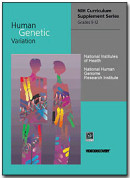
Workshop attendees will receive a free copy of and instruction on how to use the National Institutes of Health’s Human Genetic Variation curriculum. Attendees also will hear from NIEHS scientists about research in this field. All instruction will align with the 2023-adopted North Carolina science standards for biology.
About the Curriculum: NIH developed the Human Genetic Variation curriculum with the National Human Genome Research Institute for students in grades 9-12. The curriculum has two central objectives: 1) To introduce students to the major concepts related to human genetic variation. 2) To convey to students the relationship between basic biomedical research and the improvement of personal and public health. The knowledge that scientists gained as they sequenced the human genome is changing the practice of medicine, and it is vital that citizens recognize these changes and are prepared to deal with them. Being prepared involves understanding the basic science that underlies new medical practices and therapies and recognizing the complex issues and questions that some of these procedures and therapies raise. Thus, students will have the chance to think about how the detailed analysis of human genetic variation is already changing their lives.

Virtual Workshop
Tuesday, April 16, 2024
National Institute of Environmental Health Sciences
8:15 a.m. – 4:15 p.m.
Rx for Science Literacy is partnering with the National Institute of Environmental Health Sciences (NIEHS) to present Using Technology to Study Cellular and Molecular Biology, a one-day virtual workshop for educators.
About the Workshop: This workshop will feature an overview of the National Institute of Health’s Using Technology to Study Cellular and Molecular Biology curriculum, and it will feature presentations by NIEHS researchers about the technology involved in the study of SARS-CoV-2 and the human genome. All instruction will align with the 2023-adopted North Carolina science standards for biology.
This virtual workshop will be offered live and will not be available as a recording after the program is over. To receive continuing education credits for the program and to receive a copy of the curriculum manual in the mail after the workshop, all participants will be expected to participate in the entire workshop from 8:15 a.m. to 4:15 p.m., and they will be required to submit an online program evaluation.
About the Curriculum: NIH developed the Using Technology to Study Cellular and Molecular Biologycurriculum for students in grades 9-12. The curriculum addresses the major public preconceptions of science and technology, and it addresses scale and resolution, technology and origins of molecular biology, and techniques in the study of cellular and molecular biology, including microscopy, X-ray crystallography, laser technology, simulations and computations.

Wednesday, June 26, 2024
Wake Forest School of Medicine
8:00 a.m. – 4:00 p.m.
Register
*If Eventbrite says it is full, please place your name on the waitlist and you will be contacted soon after.
Rx for Science Literacy is partnering with the Wake Forest School of Medicine to present a free one-day workshop for educators.
The workshop will be offered in person only and will feature the updated and expanded Rx for Science Literacy curriculum manual. A copy of the manual along with breakfast, lunch and refreshments will be provided to attendees at no cost thanks to generous sponsorship from the Wake Forest School of Medicine’s Clinical and Translational Science Institute, Center for Vaccines at the Extremes of Aging, Sticht Center for Health Aging and Alzheimer’s Prevention and Office of Cancer Health Equity, Comprehensive Cancer Center.
The program will highlight the manual’s New Technologies in Vaccines chapter and will feature talks from Wake Forest School of Medicine researchers about why vaccines matter, current topics in vaccine research, clinical perspectives and more.
About the Curriculum: With generous support from the Biogen Foundation, NCABR and a team of science writers, biomedical researchers and curriculum developers comprehensively updated and expanded the Rx for Science Literacy curriculum manual in 2020. The updated curriculum includes a comprehensive update of all content, statistics and charts. The manual also includes a variety of new activities, resources, interviews with real world scientists and a new section on CRISPR and CRISPR technology. The manual includes chapters on nanobiotechnology, regenerative medicine and vaccines and is accompanied by several resources, including a curriculum crosswalk that shows connections to North Carolina science standards (both 2009 standards and those adopted in July 2023), the Next Generation Science Standards, and a reading guide aligned to the Common Core standards.