
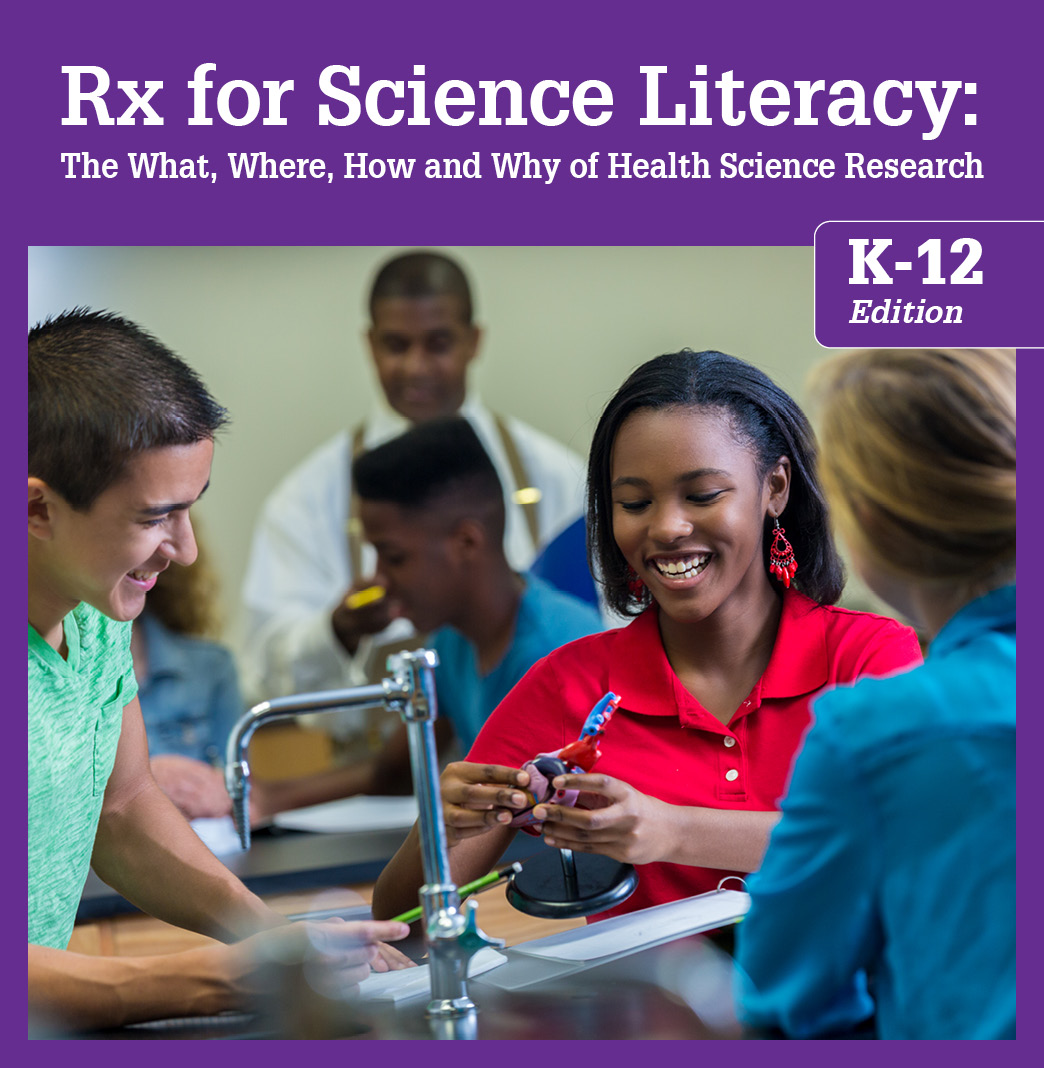
Since 1994, NCABR’s Rx for Science Literacy workshops have helped more than 5,655 educators from 97 of North Carolina’s 100 counties do just that.
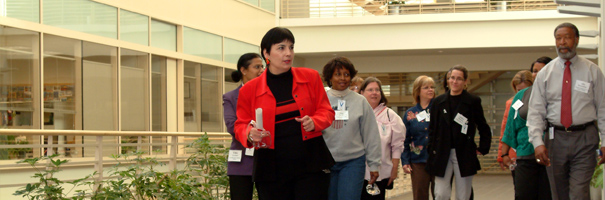
At the workshops, educators tour a research facility, hear from scientists about their latest research advances and take home a free curriculum and other bioscience education materials.
Each workshop is completely free to attend. You may attend as many workshops as you like.
To help offset expenses for substitute teachers, each workshop participant who teaches in North Carolina who attends an entire workshop and provides a completed evaluation is eligible for up to $80 in substitute teacher reimbursement.
The Rx for Science Literacy series is open to all K–12 science teachers and administrators in North Carolina as well as preservice teachers actively pursuing a degree in education.
Weight Management: The State-of-the-Science,
Obesity, Weight Loss Medications and More
Friday, December 5, 2025
Virtual with Duke University
8:30 a.m. – 4:00 p.m.
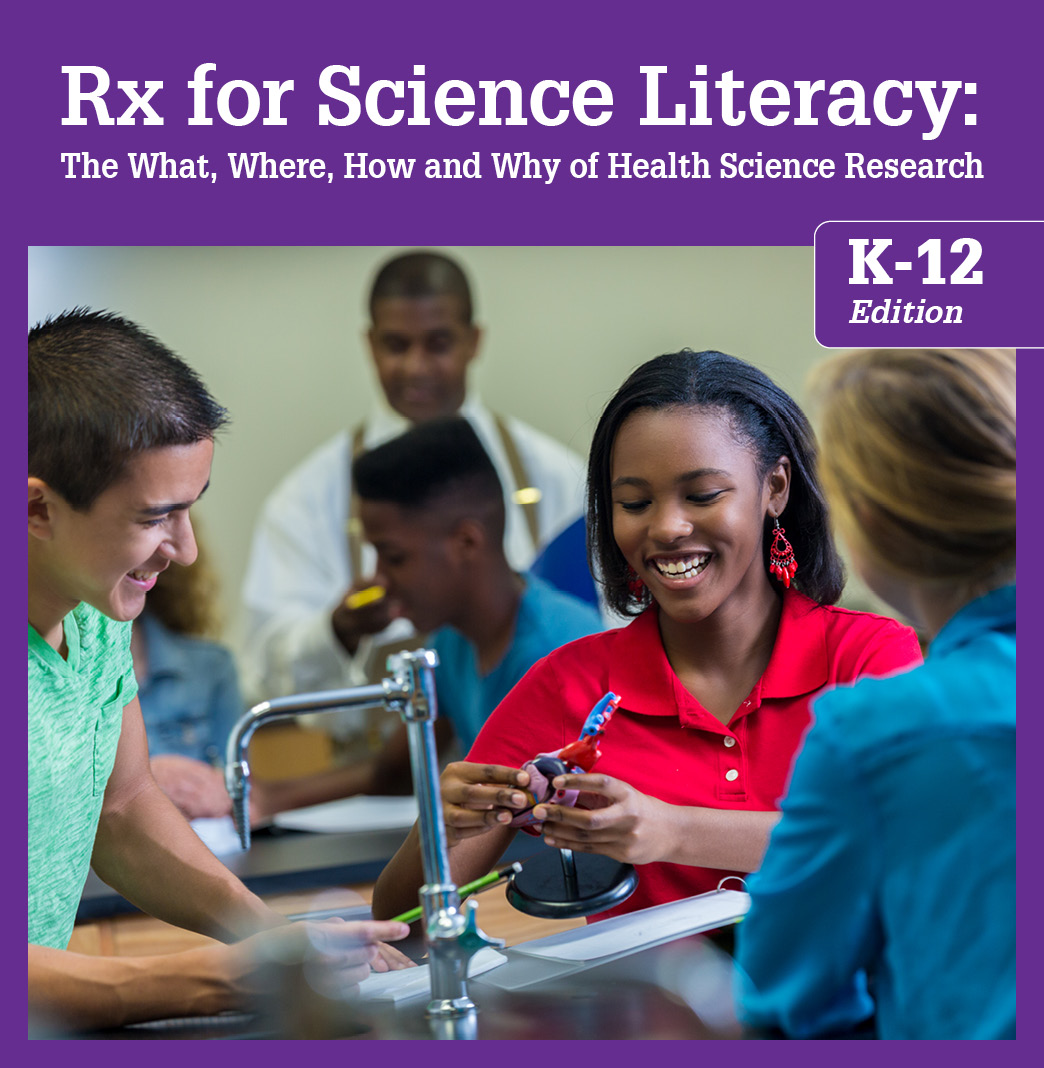
Rx for Science Literacy is partnering with the Duke University School of Medicine to present Weight Management: The State-of-the-Science, Obesity, Weight Loss Medications and More, a one-day virtual workshop featuring the updated and expanded Rx for Science Literacy curriculum.
About the Workshop: This workshop will provide an overview of the Rx for Science Literacy curriculum manual, and Duke scientists will address the latest weight management research with a focus on obesity and weight loss medications. Attendees who register after December 1, 2025, will have the option of purchasing a copy of the updated Rx for Science Literacy curriculum manual if they wish to do so, but this is not required. Sub-pay reimbursement will be provided to those who registered prior to December 1, 2025.
North Carolina-certified educators can earn up to one unit of certification renewal credit for attending this program (4 hours of additional work required).
About the Curriculum: With generous support from the Biogen Foundation, NCABR and a team of science writers, biomedical researchers and curriculum developers comprehensively updated and expanded the Rx for Science Literacy curriculum manual in 2020. The updated curriculum includes a comprehensive update of all content, statistics and charts. The manual also includes a variety of new activities, resources, interviews with real world scientists and a new section on CRISPR and CRISPR technology. The manual includes chapters on nanobiotechnology, regenerative medicine and vaccines and is accompanied by resources, including a curriculum crosswalk that shows connections to the 2023 North Carolina science standards, the Next Generation Science Standards, and a reading guide aligned to the Common Core standards.
Funding for this workshop has been made possible by:
UNC Cancer Research and Clinical Pathology Day
Thursday, December 11, 2025
The University of North Carolina School of Medicine
8:00 a.m. – 4:00 p.m.
Come step into medical school for a day with Rx for Science Literacy, which is partnering with The UNC School of Medicine to present UNC Cancer Research and Clinical Pathology Day, a one-day, in-person workshop at the UNC School of Medicine in Chapel Hill.
About the Workshop: UNC scientists will discuss:
Cancer Fundamentals:
-
- What is cancer and how do we define it?
- The importance of identifying specific subtypes of cancer
- Cancer categories: Hereditary, Chemical/environmental/radiation, Sporadic, Inflammatory/immunosuppression, Oncogenic virus, Hormone imbalances
- Therapy overview: Surgery, Chemotherapy, Immunotherapy, Hormone therapy, Targeted Therapy
- Examples: Solid tumor and hematologic malignancy
Novel Cancer Research Methodologies:
-
- Introduction to molecular/clinical genetics (diagnostic applications)
- Spatial analysis & proteomics (exciting new research methods, non-diagnostic)
Pathology Careers through a Panel Discussion, to Include:
-
- Veterinary Pathology
- Pathology PA
- Clinical Lab Scientist
- Pathologist
- Research
The workshop also will include small group, hands-on activities with scientists, and a brief overview of the updated Rx for Science Literacy curriculum manual, which will be provided to all attendees at no cost (a $178 value).
About the Curriculum: With generous support from the Biogen Foundation, NCABR and a team of science writers, biomedical researchers and curriculum developers comprehensively updated and expanded the Rx for Science Literacy curriculum manual in 2020. The updated curriculum includes a comprehensive update of all content, statistics and charts. The manual also includes a variety of new activities, resources, interviews with real world scientists and a new section on CRISPR and CRISPR technology. The manual includes chapters on nanobiotechnology, regenerative medicine and vaccines and is accompanied by resources, including a curriculum crosswalk that shows connections to the 2023 North Carolina science standards, the Next Generation Science Standards, and a reading guide aligned to the Common Core standards.
Funding for this workshop has been made possible by:



Operation Outbreak, Emerging Pathogens and Vaccines
Wednesday, March 18, 2026
Virtual with Wake Forest School of Medicine
8:15 a.m. – 4:15 p.m.
NCABR is partnering with the Wake Forest School of Medicine to present Operation Outbreak, Emerging Pathogens and Vaccines, a free virtual one-day workshop on Wednesday, March 18, from 8:15 a.m. – 4:15 p.m.
About the Workshop: This virtual workshop will show middle and high school teachers how to use the Operation Outbreak viral simulation tool, developed by the Broad Institute of MIT and Harvard, with students throughout North Carolina. Operation Outbreak is a free, multidisciplinary outbreak science curriculum that combines biology, epidemiology, public health and social sciences to inspire a holistic understanding of infectious disease outbreaks.
The workshop will feature presentations from subject matter experts at the Wake Forest School of Medicine, who will discuss mRNA vaccines, including their application for use against influenza with newborns, and other vaccines used to protect children and adults from preventable diseases, emerging pathogens and more.
About the Curriculum: Operation Outbreak lesson plans offer an engaging, interdisciplinary exploration of infectious disease outbreaks. Through interactive content, case studies and expert insights, students learn about pathogens, societal responses and prevention strategies — preparing them to tackle health security challenges and to build a resilient future.
Operation Outbreak was created by a middle school civics educator and a Harvard professor to educate students and others about how easily a viral pathogen outbreak can occur. Originally developed as a sticker-based activity with a Bluetooth-based application to simulate an outbreak, Operation Outbreak since has evolved into a global initiative, equipping students, educators and public health practitioners with the tools to understand and respond to outbreaks of any scale. Dr. Todd Brown, the middle school civics educator who co-founded Operation Outbreak, will present the simulation at this workshop and will discuss classroom activities related to the data collected during a simulation.
Funding for this workshop has been made possible by:

Clinical and Translational Science Institute (CTSI)
Center for Vaccines at the Extremes of Aging (CVEA)