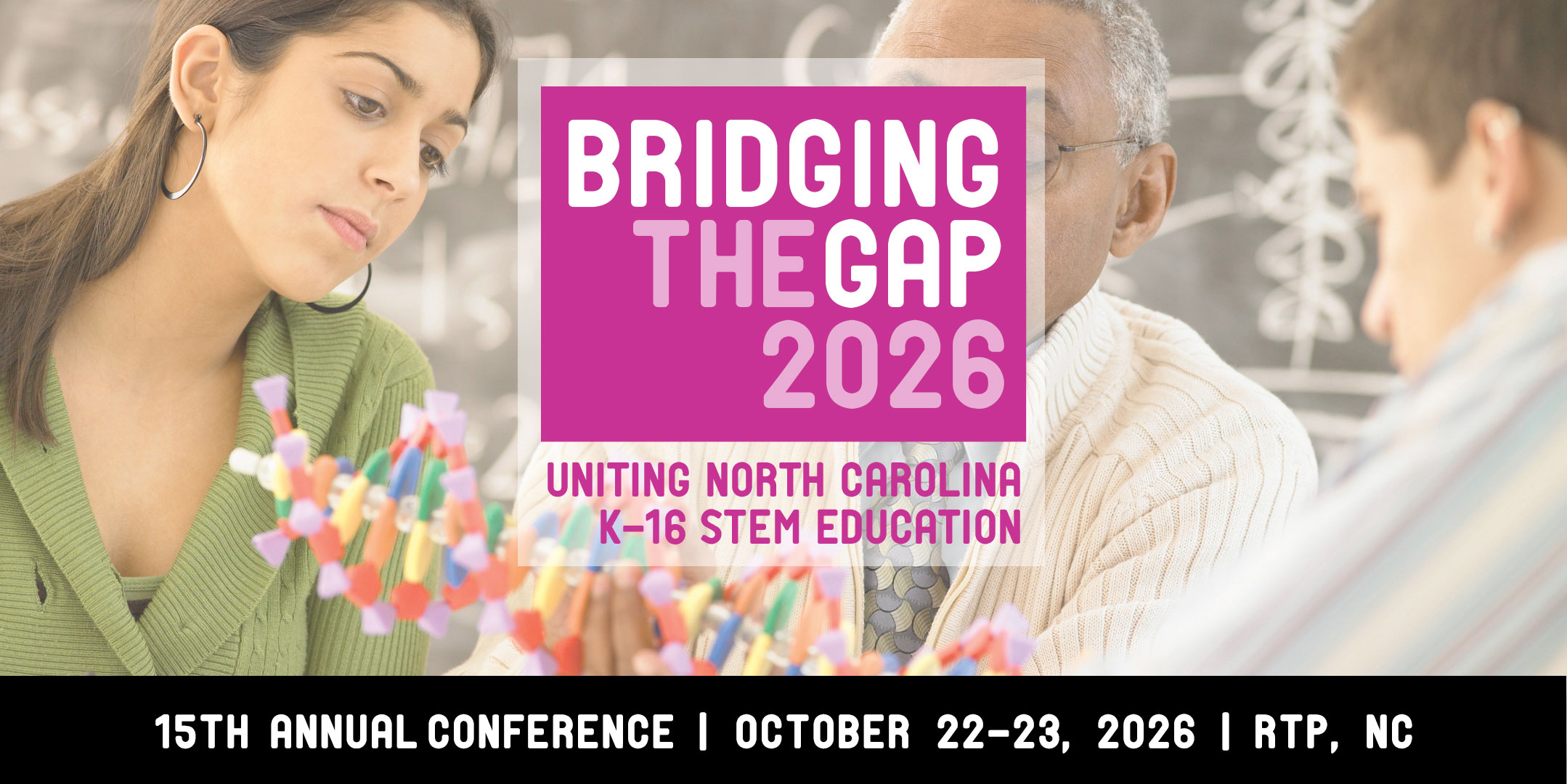
NCABR leads the way in providing STEM-based professional education for K-12 education professionals. Our Rx for Science Literacy workshop series, which has reached more than 5,000 attendees in nearly every county in the state, provides free continuing education to teachers with a focus on bioscience innovations and current research from our member institutions and partners. Bridging the Gap, our annual K-16 STEM educators conference, is the state’s premier educational forum that connects teachers to scientists and to each other, promoting a greater understanding of bioscience research and career opportunities. Alongside statewide and federal partner organizations, NCABR hosts professional development programs for teachers in related bioscience fields.
Learn more and sign up for our workshops and annual conference below.
At a Glance: Rx for Science Literacy workshop series
NCABR’s Rx for Science Literacy workshops are one-day professional development programs for educators in grades K-12 that have served since 1994 as the cornerstone of NCABR’s efforts to promote public understanding of bioscience research and careers.
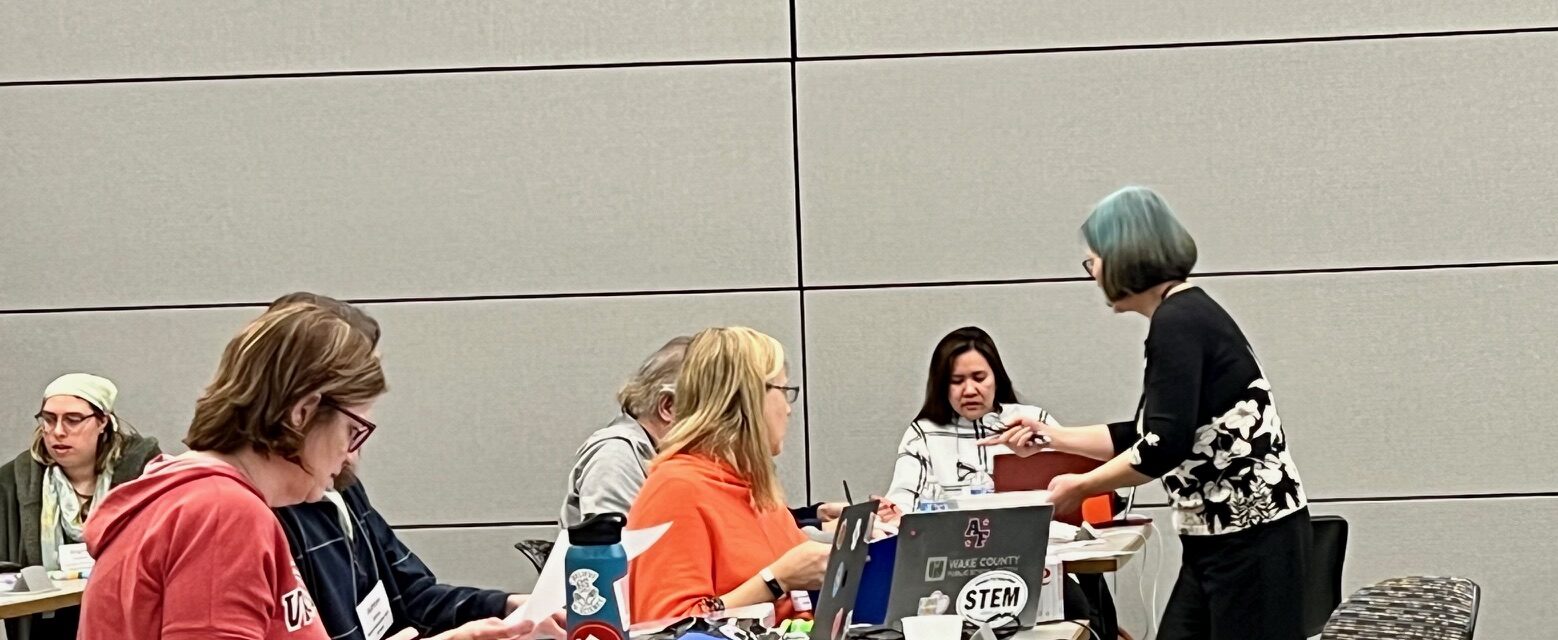
Attendees receive information, resources and training in a wide range of bioscience topics at the workshops, which are customized to showcase the science conducted at the host institutions. Each workshop – either held at a North Carolina research institution or virtually – is based on NCABR’s Rx for Science Literacy curriculum or a curriculum developed by the National Institutes of Health or by one of NCABR’s STEM education partners.
Rx for Science Literacy workshops are free to attend and are open to all K-12 teachers and administrators at public, private and federal North Carolina schools. When held virtually, workshops may be attended by a national audience.
At a Glance: Bridging the Gap K-16 STEM education conference
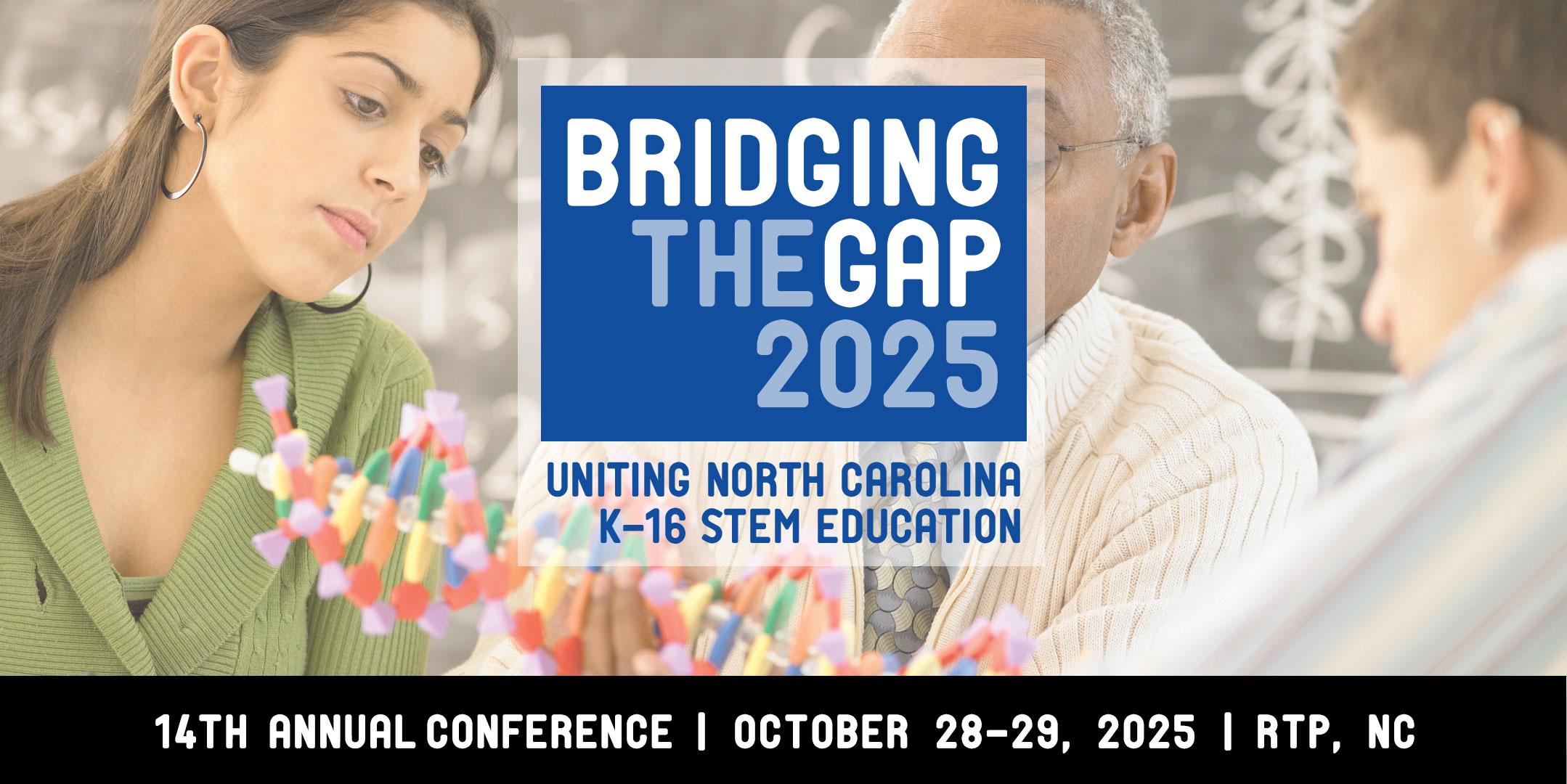
NCABR founded Bridging the Gap – North Carolina’s only K-16 STEM education conference – in 2012 to fortify and diversify the state’s STEM workforce pipelines. While the NCABR membership infuses life science research and career information into each conference, Bridging the Gap is the forum for exchange for all STEM stakeholders in North Carolina. Each year, Bridging the Gap removes silos and brings together all educators to provide a collaborative forum unlike any other in North Carolina to share STEM education resources and bioscience research information with the broadest and largest audience possible.
Presenters each year include K-12 teachers and administrators, higher education faculty from North Carolina and beyond, and industry, government and informal science and other STEM partners.